Personal Locator Beacons
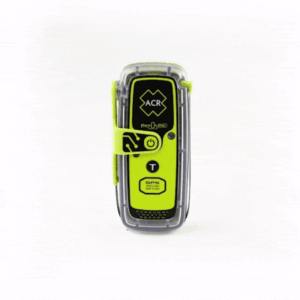
Personal locator beacons (PLBs) are compact emergency distress beacons that send your GPS location to Australian search and rescue when something goes seriously wrong in remote or offshore areas. This category is for hikers, boaters, four-wheel drivers and remote workers who need a simple, reliable way to call for help anywhere in Australia. Safe-Life supplies personal locator beacons in Australia, including the ACR ResQLink 400 Personal Locator Beacon for bushwalking, marine and remote-area use.
Showing all 3 results
Showing all 3 results
Personal locator beacons (PLBs) are compact emergency distress beacons that send your GPS location to Australian search and rescue when something goes seriously wrong in remote or offshore areas. This category is for hikers, boaters, four-wheel drivers and remote workers who need a simple, reliable way to call for help anywhere in Australia. Safe-Life supplies personal locator beacons in Australia, including the ACR ResQLink 400 Personal Locator Beacon for bushwalking, marine and remote-area use.
How this category works
What is a personal locator beacon (PLB)?
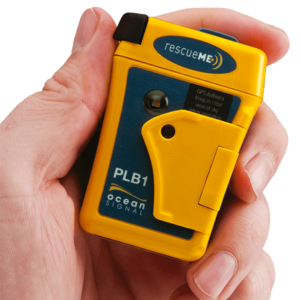
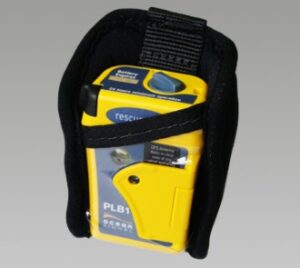
A personal locator beacon (PLB) is a small, dedicated emergency beacon that you carry on your person when travelling in areas with poor or no mobile coverage. When activated, a PLB transmits a distress signal and your position through the international COSPAS–SARSAT satellite system so Australian search and rescue teams know that you need urgent help and where to find you. PLBs are designed for life-threatening emergencies only and are treated as a serious distress call, not a convenience communication device.
Safe-Life focuses on GPS personal locator beacons that are compact, waterproof and built for Australian conditions. Our range is selected to work with the Australian rescue system, covering activities such as hiking, trail running, boating, four-wheel driving and remote work anywhere in Australia.
How do personal locator beacons work?
Personal locator beacons follow a straightforward process when you trigger them in an emergency:
Activation: You manually deploy the antenna and press the activation button on your PLB when you are in serious distress or life-threatening danger.
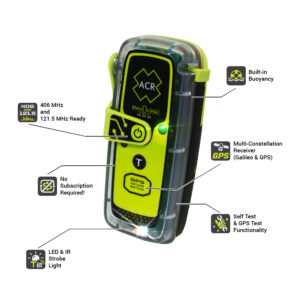
Satellite transmission: The beacon sends a 406 MHz distress signal that includes its unique ID and, on GPS models, your approximate location coordinates.
Signal relay: Satellites receive the signal and relay it to the appropriate ground station, which in Australia is coordinated by the Australian Maritime Safety Authority (AMSA).
Rescue coordination: AMSA uses the beacon registration details to contact your listed emergency contacts, confirm the situation and task the appropriate search and rescue resources.
Local homing: Many PLBs also transmit a low-power 121.5 MHz homing signal and may include a strobe, helping rescuers pinpoint your exact location once in the area.
For a more detailed explanation of how distress signals, satellites and search teams work together, you can read our article How do personal locator beacons work?
Who are personal locator beacons for?
Personal locator beacons are used across Australia by people who spend time away from reliable phone coverage, including:
Hikers, bushwalkers and trail runners in national parks and remote tracks
Four-wheel drivers, overlanders and touring motorcyclists
Offshore and coastal boaters, kayakers and paddlers
Farmers, station workers and remote-area contractors
Surveyors, environmental workers and other field staff
Solo travellers or photographers exploring remote locations
PLBs can also give peace of mind to families with loved ones travelling solo, including older Australians who still enjoy independent hiking, boating or camping in remote areas.
What types of personal locator beacons does Safe-Life offer?
Within this category, Safe-Life focuses on reliable, GPS-enabled PLBs suitable for a wide range of Australian conditions:
Compact GPS personal locator beacons: Handheld, waterproof beacons such as the ACR ResQLink 400 Personal Locator Beacon, designed for hiking, boating and remote work where a small, rugged unit is essential.
Hiking and outdoor PLBs: Lightweight beacons carried in a backpack, on a harness or in a pocket for bushwalking, trail running and general adventure travel.
Marine and paddling PLBs: Highly visible, waterproof devices suitable as a personal emergency beacon for sailors, kayakers and small craft operators when used alongside standard marine safety gear.
Key features and benefits of PLBs
Feature
Description
Global 406 MHz distress signal
Transmits an internationally recognised emergency signal that is monitored by rescue authorities.
GPS positioning
Provides coordinates to help rescuers locate you faster than non-GPS emergency beacons.
121.5 MHz homing signal
Allows aircraft and ground crews to home in on your exact position once they are in the search area.
Long-life battery
Typically designed to operate for at least 24 hours once activated, even in cold conditions.
Rugged, waterproof housing
Built to withstand outdoor, marine and remote-area environments.
Registration with AMSA
Beacon details and your emergency contacts are stored with the Australian Maritime Safety Authority to support rapid and accurate response.
Compact and lightweight
Small enough to carry on your person so it is with you if you become separated from your vehicle or boat.
Do I need to register my PLB in Australia?
Yes, registration is a critical part of owning a personal locator beacon in Australia. The Australian Maritime Safety Authority (AMSA) manages a national register of PLBs, EPIRBs and other distress beacons. Registration is free and allows AMSA to quickly identify who the beacon belongs to, contact your listed emergency contacts and gather extra information that can speed up and improve the response when the beacon is activated.
Why choose Safe-Life for personal locator beacons?
Australian-owned supplier with experience in safety and emergency alert systems for remote and at-risk users.
Products selected to work with the Australian COSPAS–SARSAT and AMSA rescue framework.
Clear guidance on choosing between a PLB, personal alarms and other emergency options for different situations.
Support with understanding registration requirements, correct use and testing procedures.
Fast dispatch across Australia from our local warehouse.
Frequently asked questions
Personal locator beacon FAQs
What is a personal locator beacon?
A personal locator beacon is a portable emergency distress beacon that sends a coded signal and your location to rescue authorities when you are in life-threatening danger. It is designed for use in areas without reliable mobile coverage and should only be activated in serious emergencies.
Do I need to register my PLB in Australia?
Yes, PLBs used in Australia must be registered with the Australian Maritime Safety Authority. Registration is free and links your beacon ID to your details and emergency contacts, which helps AMSA confirm genuine distress, reduce false alarms and coordinate the right rescue response.
How is a PLB different from an EPIRB or a GPS tracker?
A PLB is a personal distress beacon carried on your body, while an EPIRB is usually fitted to a vessel or used for marine applications. Commercial GPS trackers often rely on mobile networks and are not part of the COSPAS–SARSAT rescue system. A PLB is dedicated to emergency signalling and is treated as a formal distress call.
When should I activate a personal locator beacon?
You should only activate a PLB when there is a serious and immediate risk to life, and you cannot get help any other way. Typical situations include serious injury, being lost without supplies, life-threatening weather exposure or vessel/vehicle emergencies in remote areas.
How long does a PLB battery last?
Most modern personal locator beacons are designed to operate continuously for at least 24 hours once activated, and have a replacement interval measured in years when stored correctly. Always check the expiry date on the beacon label and replace the battery or unit before that date.
Can I test my PLB?
Yes, most PLBs include a built-in self-test function that briefly checks the battery and internal electronics without sending a live distress signal. You should only use the manufacturer-approved test procedure and avoid pressing the full activation button unless you are in a genuine emergency.
Is a PLB suitable for solo hiking and remote travel?
A PLB is well suited to solo hiking, trail running and remote travel because it stays with you even if you become separated from your vehicle or boat. It should be carried on your body or in a quickly accessible pocket rather than buried deep in a pack.