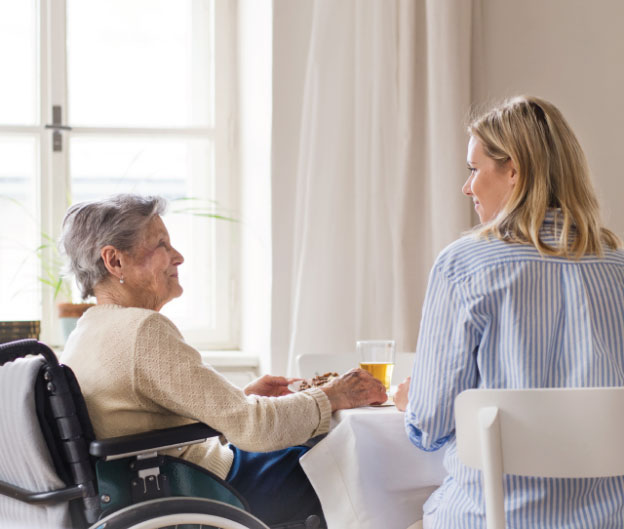
A duress alarm is a device that lets a person silently call for help when they feel threatened, unsafe, or have had a fall or medical event. Unlike a standard emergency call, duress alarms are designed to summon assistance without alerting a threat or drawing unwanted attention.
Safe-Life is an NDIS-registered Australian provider (Provider Number: 4050109546) supplying duress alarms, nurse call systems, and personal emergency devices to aged care facilities, hospitals, GP clinics, community service organisations, and individuals across Australia. Every device we supply is RCM marked and EESS registered (where appropriate).
Personal Duress Alarms for Elderly Australians
A personal duress alarm gives an older person living alone a direct line to help at the press of a button. Safe-Life recommends a duress alarm for any senior who lives alone, has a falls risk, or manages a health condition that could lead to a sudden emergency. Safe-Life supplies three personal duress devices suited to elderly Australians.
Safe-Life 4G GPS Pendant Alarm — from $447.30 (GST-free for medical use)
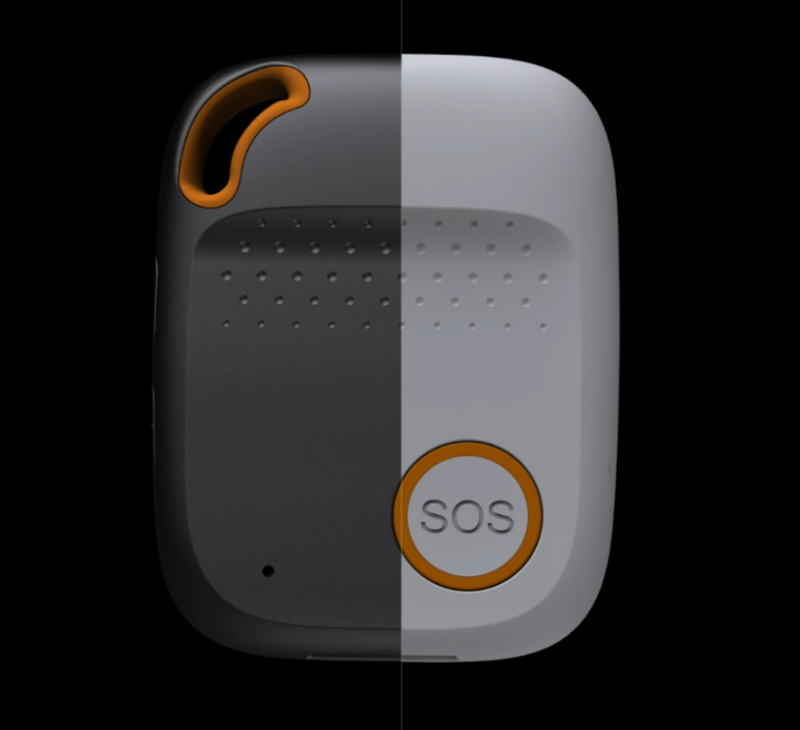
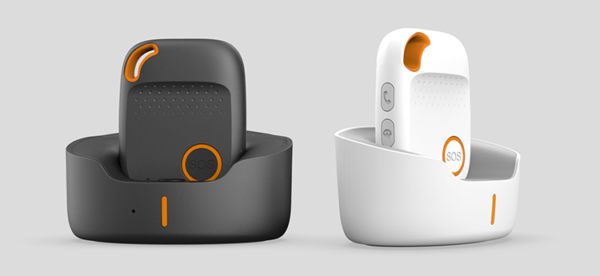
The Safe-Life 4G GPS Pendant Alarm is a mobile personal medical alarm that sends SMS alerts with GPS location and places hands-free calls when the SOS button is pressed or a fall is detected. It operates on the Telstra 4G network and works anywhere in Australia with mobile coverage — indoors, outdoors, and away from home.
| Feature | Specification |
|---|---|
| Network | Telstra 4G |
| Battery life | 2–3 days typical |
| Water resistance | IP67 (safe for hand-washing and rain) |
| Fall detection | Yes — automatic with SMS alert |
| GPS tracking | Yes (GPS + Wi-Fi + Bluetooth assisted) |
| Two-way calls | Yes, hands-free speakerphone |
| Emergency contacts | Up to 10 numbers |
| Monitoring fee | None required — self-monitored. Optional professional monitoring available. |
| SIM card | Telstra-managed, $66 annual renewal |
| Colours | Black or white |
| Warranty | 12 months |
Comes pre-programmed and ready to use. Includes lanyard, belt clip, and keychain attachment. GST-free when purchased for medical purposes.
NDIS eligible: Safe-Life is a registered NDIS provider. At $497 including SIM, this device falls within the low-cost AT threshold — many participants can access it through Core Supports without a formal OT assessment, though a written recommendation is advisable. Learn about NDIS funding at Safe-Life →
Safe-Life Falls Detection Watch — from $447.30 (GST-free for medical use)
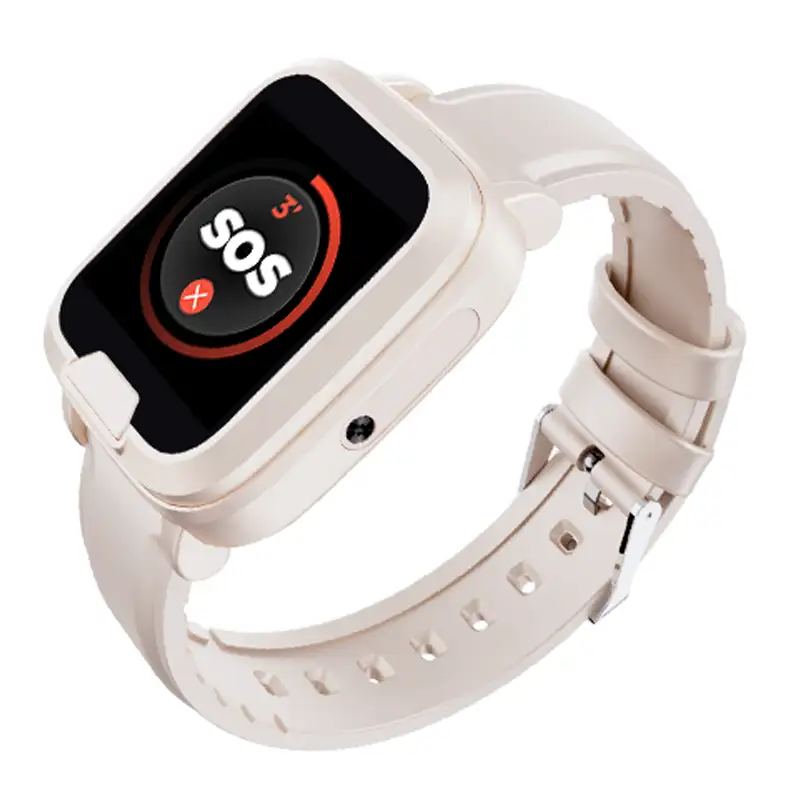
The Safe-Life Falls Detection Watch is a 4G medical alert smartwatch with automatic fall detection, real-time GPS tracking, and two-way calling. Designed for seniors and people living with disabilities who want reliable personal safety in a wrist-worn device.
| Feature | Specification |
|---|---|
| Network | 4G LTE — Telstra, Optus and Vodafone compatible |
| Display | AMOLED touchscreen, 480×320 |
| Battery life | 1–3 days |
| Water resistance | IP67 |
| Fall detection | Yes — automatic, with 10-second cancel window |
| GPS tracking | Yes (GPS + Glonass + Wi-Fi + Bluetooth) |
| Heart rate & SpO₂ | Yes — on-demand monitoring |
| Two-way calls | Yes, directly from wrist — no phone required |
| Emergency contacts | Up to 10 numbers |
| Monitoring fee | None required |
| SIM card | Telstra-managed, $66 annual renewal |
| Colours | Black or white |
| Optional accessories | Magnetic watch bands in multiple colours — $40 each (recommended for limited dexterity) |
| Warranty | 12 months |
Both the pendant and watch are eligible for NDIS funding. Safe-Life issues compliant invoices for plan-managed and self-managed participants. Learn more about NDIS smartwatch funding →
Caregiver Call Button Kit — from $55.98
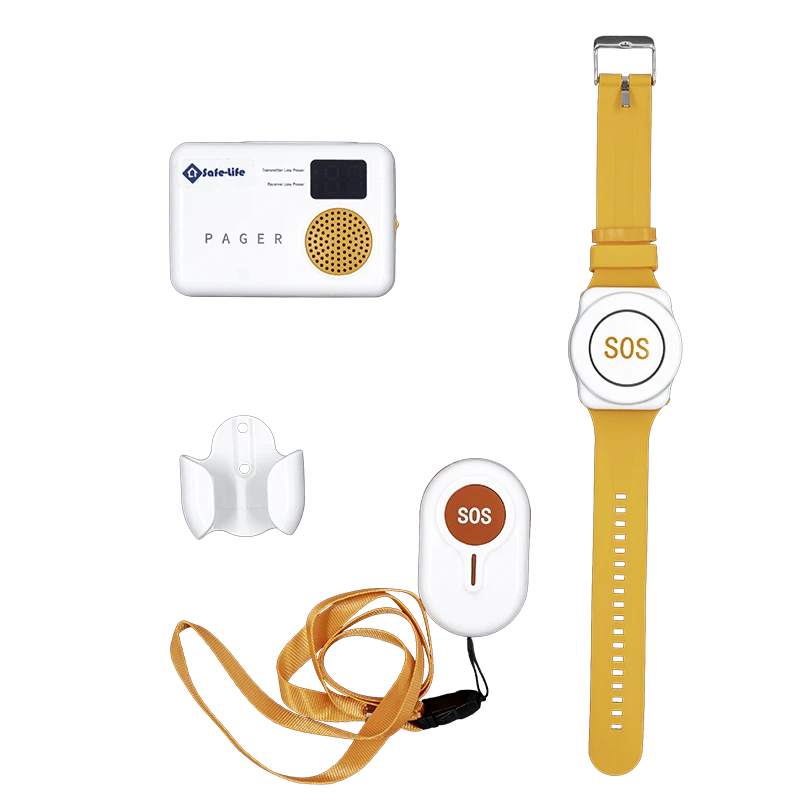
For in-home use where a lower-cost option is sufficient, the Caregiver Call Button Kit pairs a wearable SOS pendant with a portable pager that alerts a carer anywhere in the home. No subscription, no programming required — insert batteries and it’s ready.
| Feature | Specification |
|---|---|
| Range | Up to 35 metres through typical walls |
| Frequency | 433 MHz RF — no internet or mobile required |
| Water resistance | IP55 splash-resistant |
| Subscription | None — battery operated |
| Expandable | Up to 20 devices paired to one pager |
| Kit options | Five configurations from $55.98 to $100.96 |
Suitable for home, assisted living, and small care facilities. View full home care kit range →
Lone Worker Duress Alarms
Under the Work Health and Safety Act 2011, a Person Conducting a Business or Undertaking (PCBU) has a legal duty to manage risks for workers in remote or isolated work — including any worker who may be separated from assistance due to the location, time, or nature of their work. Safe Work Australia specifically identifies providing duress alarms or alert systems as a control measure for lone workers facing foreseeable risks of aggression or violence.
This duty applies to a wide range of Australian workers: community service workers, home care nurses, social workers, real estate agents, security guards, utility workers, teachers, and anyone working alone or after hours.
Safe-Life 4G GPS Lone Worker Alarm — $546.70 (inc. GST)
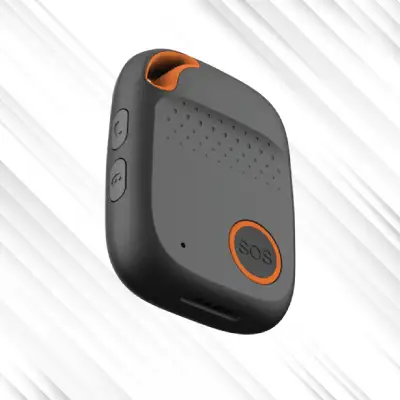
This is the same device as the personal medical alarm pendant, supplied with GST applied for non-medical OHS and duress applications. It gives lone workers a discreet, reliable duress capability with GPS tracking, automatic fall detection (man-down), and no monthly monitoring fees.
- Silent SOS activation — press without alerting a threat
- Immediate SMS to up to 10 contacts with Google Maps location link
- Automatic sequential calling until someone answers
- GPS tracking with geo-fencing alerts
- Fall detection for workers at height or in hazardous environments
- Inactivity monitoring — triggers alert if no movement detected for a set period
- 4G coverage via the Telstra network — works nationally
- No monthly monitoring fees — self-monitored
- IP67 waterproof, 2–3 day battery life
- Pre-programmed and delivered ready to use
The Watch Alarm for Lone Workers is also suitable for lone workers where a wrist-worn device is more practical.
| Role | Recommended device | Key reason |
|---|---|---|
| Home care / community services | 4G pendant | Discreet, wearable under clothing |
| Healthcare workers | 4G pendant or watch | Hands-free call, GPS |
| Security, property management | 4G pendant | Rugged, long battery, GPS |
| Remote / rural field workers | 4G pendant + satellite beacon | Backup outside mobile coverage |
| Teachers, school staff | 4G pendant or pendant-to-pager | No subscription option available |
| Lone worker watch alarm | Watch Alarm 4G | Wrist-worn, OHS/non-medical version |
Case study: How Aveo uses Safe-Life lone worker alarms →
Request a quote for your organisation →
Duress Alarms for GP Clinics, Medical Centres and Healthcare Facilities
Healthcare workers face a statistically elevated risk of workplace violence. Duress systems in clinical settings need to be reliable, simple to activate under stress, and matched to the specific layout of the facility — a GP clinic has different needs to a hospital ward or physiotherapy practice.
Safe-Life supplies the Sentinel Wireless Call System — a low-cost, no-installation wireless duress and nurse call solution designed specifically for clinics, medical centres, NDIS homes, and community health facilities.
Sentinel Wireless Call System — price on application
Request a quote → | Contact us →
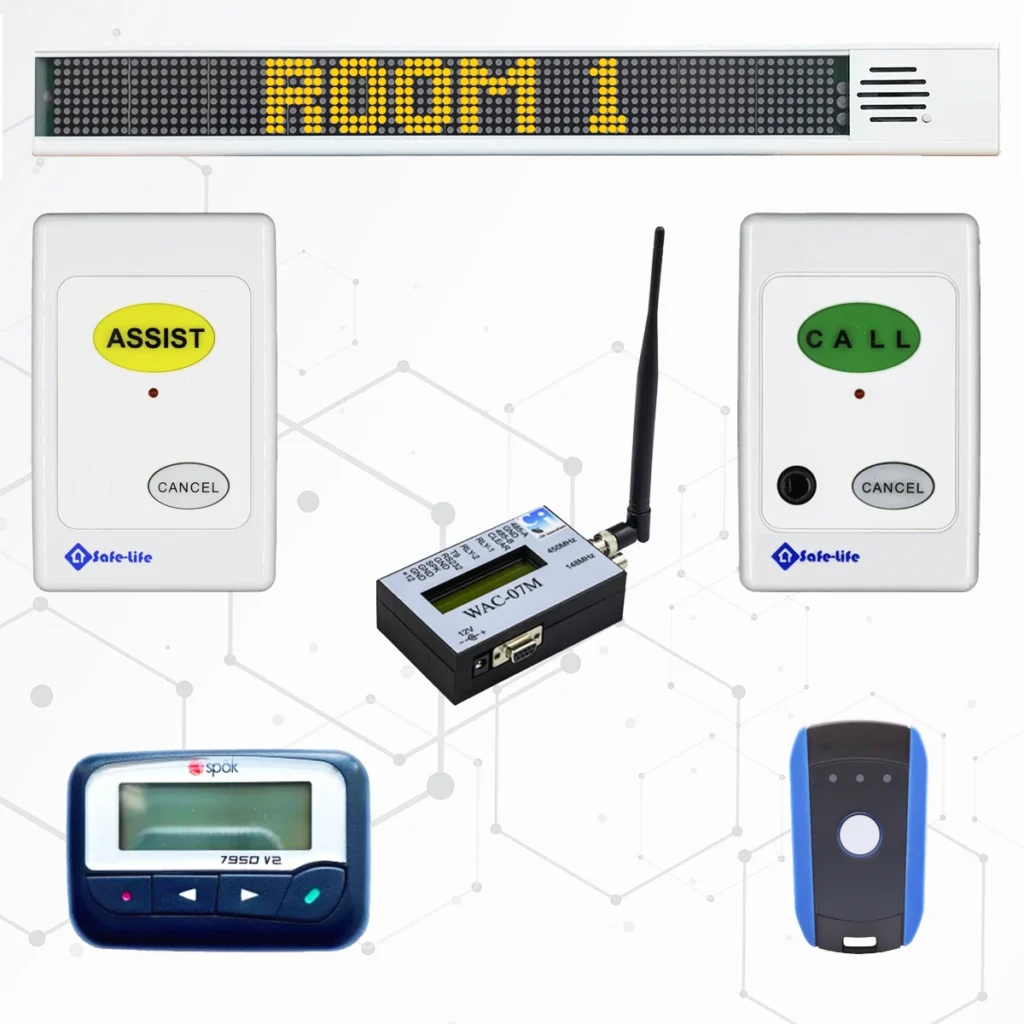
The Sentinel system uses POCSAG wireless technology — the same protocol used in hospitals and aged care facilities — to deliver silent or audible alerts from fixed call-points or wearable pendants directly to staff pagers or annunciator displays. No cable installation required.
- Battery-powered call-points — no cable installation required
- Wireless range: 150 metres free-space. Range extenders available for multi-level buildings
- Unlimited call-points, pendants, and pagers in a single system
- Each call-point pre-programmed with specific location message and tone alert
- Low battery reporting on all devices
- Call-point options: Call, Assist, Emergency, and Duress functions
- Wearable wireless pendants for staff who move between rooms
- Optional annunciator displays for reception or nursing stations
- Integrates with building management and security systems via dry contact relay
- On-site assessment available for Melbourne-area facilities
- Priced lower than comparable competitor systems
| Facility | Recommended configuration |
|---|---|
| GP clinic (2–4 consult rooms) | 1 call-point per room + 1 pager per staff member |
| Physiotherapy practice | Wearable pendants for reception staff + fixed buttons in treatment rooms |
| Dental practice | Under-desk call-points at reception + staff pagers |
| Community health centre | Mixed fixed and wearable, annunciator display at nurse station |
| NDIS / SDA home | Wearable pendants + pager, expandable as needs change |
Pendant to Pager Kit — Long Range — $477
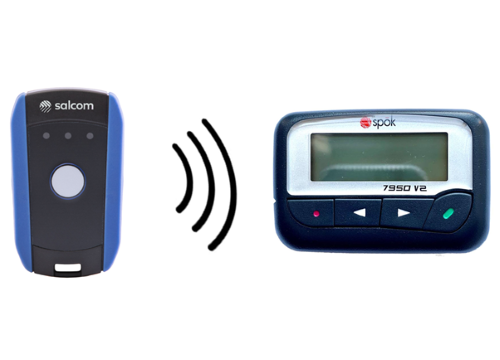
For small practices needing a simple staff duress solution without a full call system, the Pendant to Pager Kit provides reliable RF wireless communication between a wearable staff pendant and a portable pager carried by a designated responder. No subscription, no programming required.
| Feature | Specification |
|---|---|
| Range | Up to 150 metres (extendable with repeater to 300m+) |
| Pendants per pager | Unlimited |
| Pendant battery life | 12 months |
| Pager battery life | At least 30 days (24-hour use) |
| Subscription | None — RF wireless |
| Alert message | Personalised per pendant (room number or staff name) |
| GST | GST-free for genuine medical applications |
| Warranty | 12 months |
Not sure which clinic system is right for your facility? Call us on 03 9588 0392 — we provide free needs assessments and on-site visits for larger Melbourne-area facilities.
Case studies: Nurse call system upgrade — Melbourne SRS → | Wireless call system for NDIS SDA home → | Wireless call system case study →
Nurse Call Pendants for Hospital Wards and Aged Care Facilities
For healthcare facilities that already have a nurse call system installed, Safe-Life supplies a range of replacement and additional nurse call cords and pendants compatible with all major Australian nurse call brands including Smart Caller, CareTech, Sedco, Questek, Xacom, Advance Care, and Austco.
Silicon Nurse Call Cord — Single Button — $63
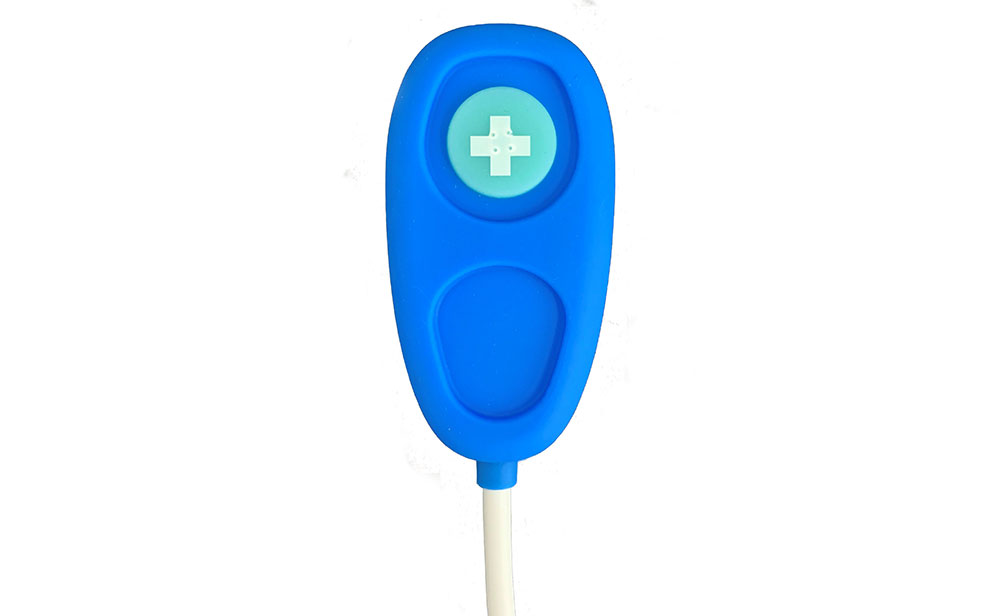
- IP67 waterproof and dustproof
- Antibacterial silicone construction for infection control
- Glow-in-the-dark call button
- 6.35mm plug — suits all nurse call system brands
- 3-metre cord standard (5-metre also available — $79.50)
- Includes fastener clip
- 12-month warranty
Silicon Nurse Call Cord — Two Button (Call + Light Switch) — $70
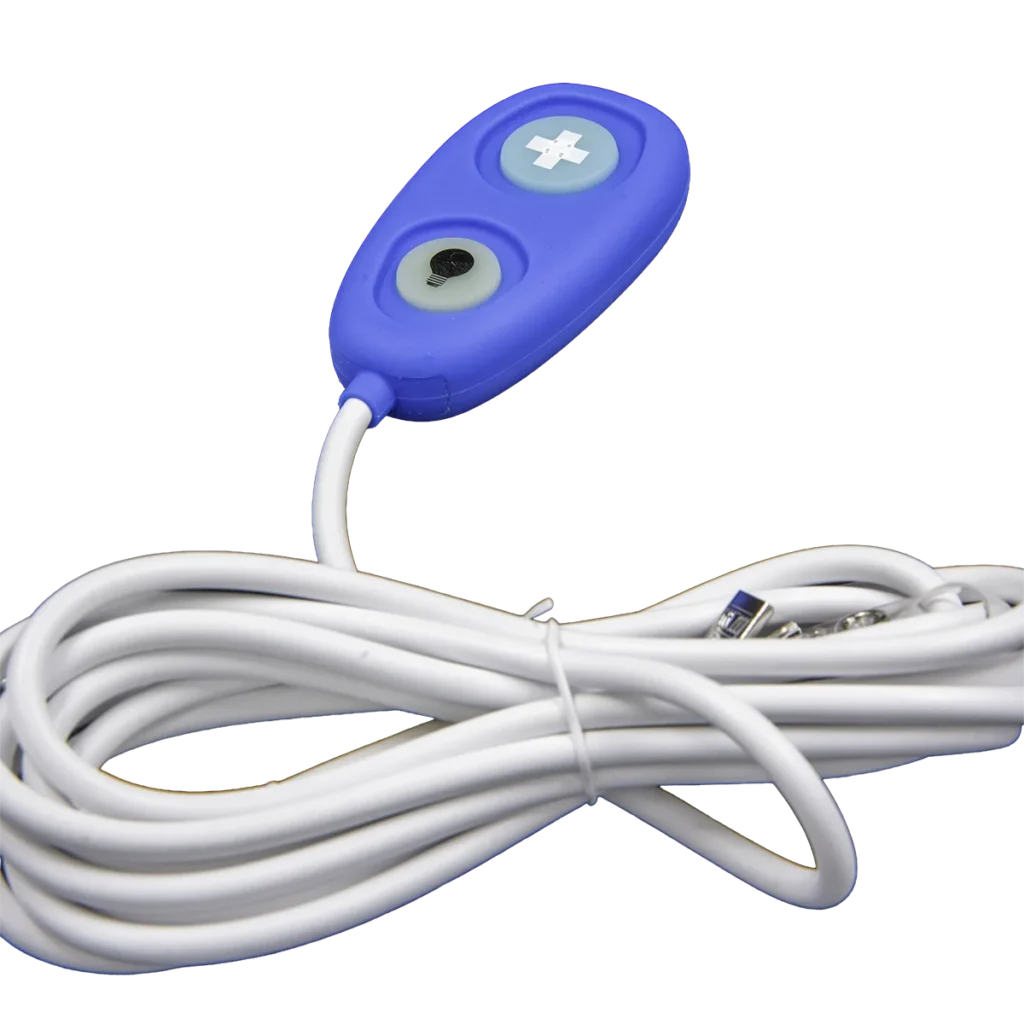
Available in two configurations:
- Stereo Tip & Ring: Smart Caller, CareTech, Sedco, Questek, Xacom
- Stereo Tip & Sleeve: Advance Care, Austco and more
IP67 waterproof, antibacterial silicone, glow-in-the-dark button. 3-metre cord.
Barrel Grip Nurse Call Cord — $43
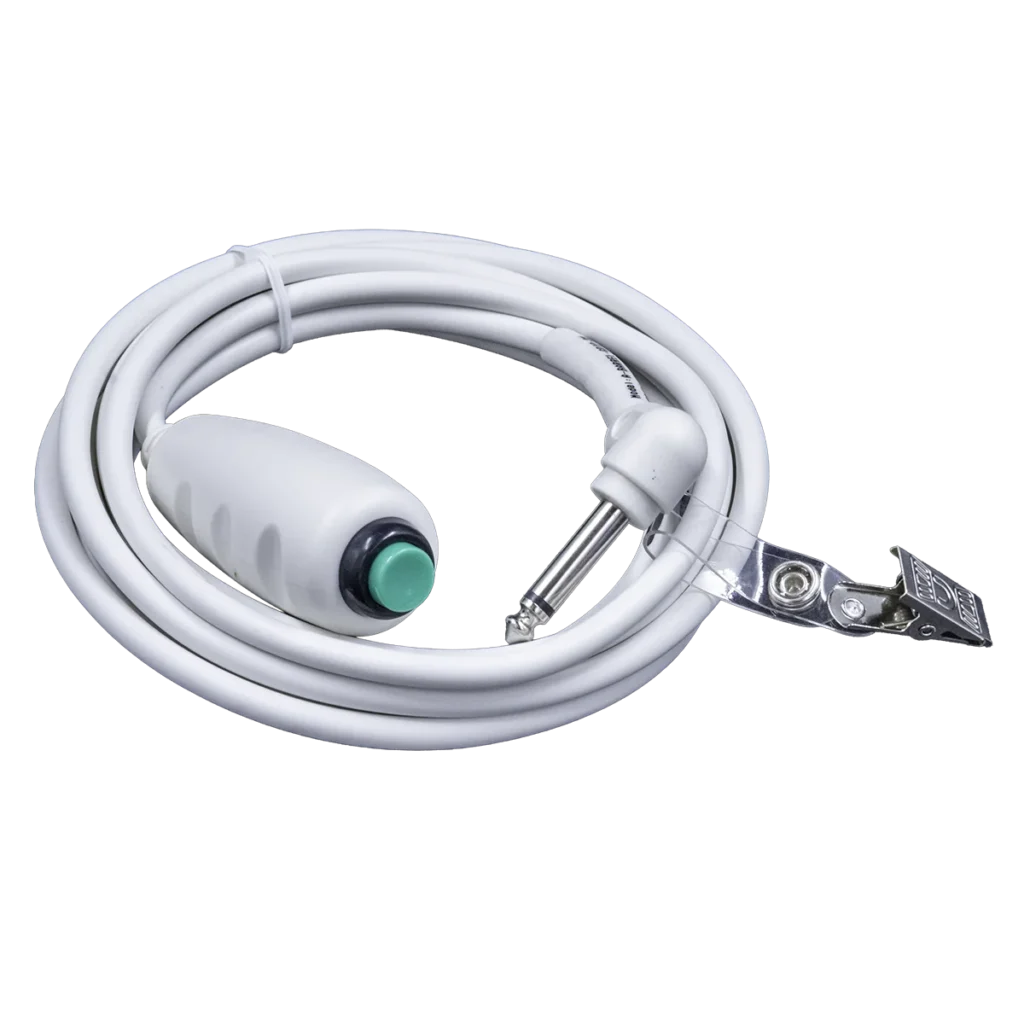
Cost-effective, durable standard cord with mono 6.3mm right-angle plug. Compatible with most nurse call brands. Hospital-grade PVC cable. 3-metre standard (5-metre $63). 12-month warranty.
Pressure Pad Nurse Call Cord — $70
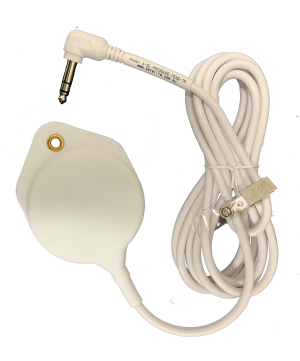
Large sensitive pad surface — activates from any point on the pad. Ideal for patients who have difficulty gripping a standard call cord. IP67 rated, antibacterial and antifungal. Braille marked. Includes eyelet for mounting in awkward positions. Available in mono, Stereo T&R, and Stereo T&S configurations.
Not sure which cord suits your nurse call system? Call us on 03 9588 0392 and we’ll confirm compatibility with your brand.
View the full nurse call system range →
Disabled Toilet Alarm Systems
Safe-Life supplies toilet alarm kits for disabled and accessible bathrooms in schools, aged care facilities, hospitals, clinics, medical centres, and public restrooms across Australia.
Basic Toilet Alarm Kit — $341

The basic kit includes a call-point with backlit Call button, 12V plug-pack power supply, and an overdoor light with integrated piezo sounder. When the button is pressed, the overdoor light flashes and the sounder activates until a carer cancels the call.
- Cable reach from call-point to overdoor light: up to 400 metres
- Optional UPS backup: up to 12 hours during power outages
- Button colours: Green (Call), Red (Emergency), Yellow (Assist)
- IP64 splashproof gaskets available for wet area installation
- Wireless upgrade available via UHF modules
- Integrates with building management and security systems via dry contact relay
- Expandable: add call-points, overdoor lights, pagers, and annunciator displays
- Installed across Australian clinics, hospitals, universities, schools, and aged care facilities
While there is currently no mandatory legislative requirement under AS1428.1-2009 to install emergency call buttons in all accessible toilets, Safe-Life recommends installation as best practice for duty of care in any facility where vulnerable people may need assistance. Government proposals are under review to introduce new requirements.
For multi-toilet installations, complex facilities, or wireless configurations, request a quote or call 03 9588 0392.
Case studies: Basic toilet alarm installation → | Wireless toilet alarm system — NSW school →
View the Safe-Life Toilet Alarm Installation Handbook →
Emergency Satellite Beacons for Remote Workers
For workers in remote or rural areas without reliable mobile coverage, a personal duress alarm operating on the 4G mobile network is not sufficient. Safe-Life supplies registered emergency satellite beacons that operate independently of mobile networks and connect directly to the Australian Search and Rescue satellite system.
All PLBs (Personal Locator Beacons) must be registered with the Australian Maritime Safety Authority (AMSA). Registration is free and mandatory.
ACR ResQLink 400 Personal Locator Beacon — $399
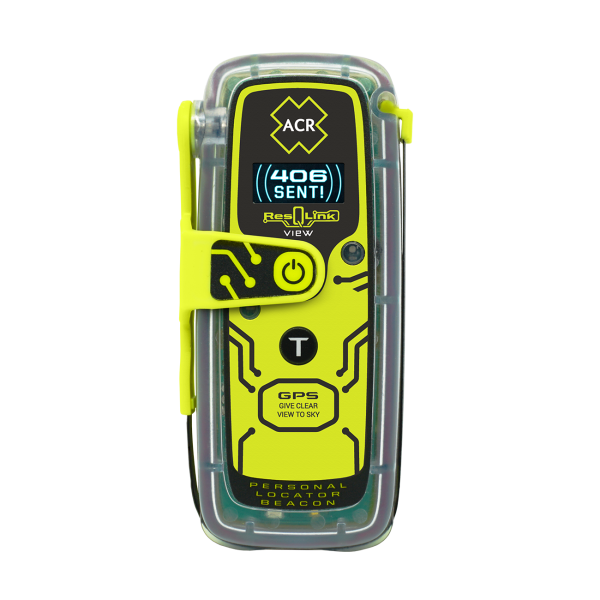
Compact PLB with GPS-integrated position transmission to the COSPAS-SARSAT international search and rescue satellite system. Waterproof, buoyant, and built for remote emergency use.
Ocean Signal rescueME PLB1 — $399
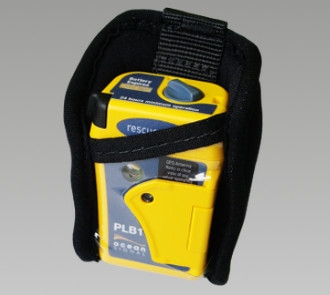
One of the world’s smallest PLBs. Integrates GPS for fast position acquisition and transmits to the COSPAS-SARSAT network. Designed for workers and outdoor users in remote locations.
Ocean Signal MOB1 — $499
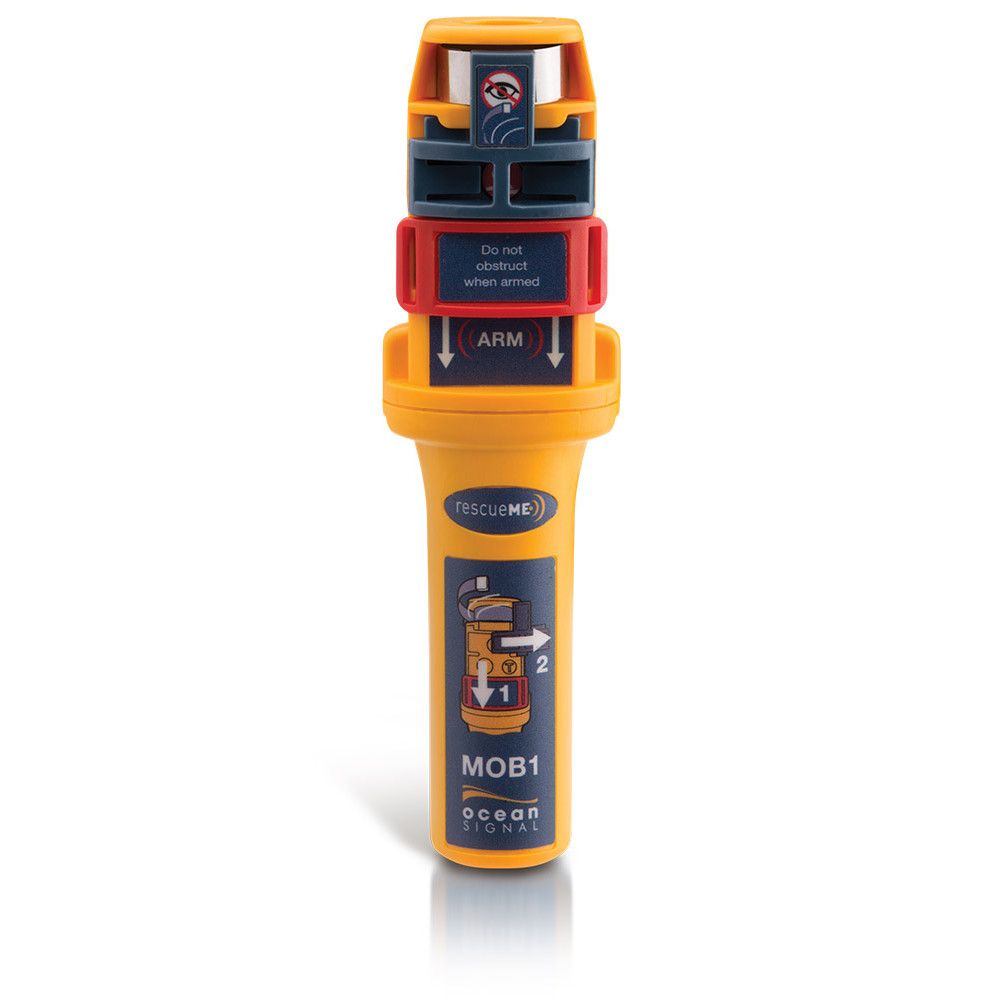
Man Overboard beacon with AIS and DSC transmission in addition to satellite. Designed for maritime applications and high-risk remote environments requiring immediate, multi-channel alerting.
ZOLEO Satellite Communicator — $345
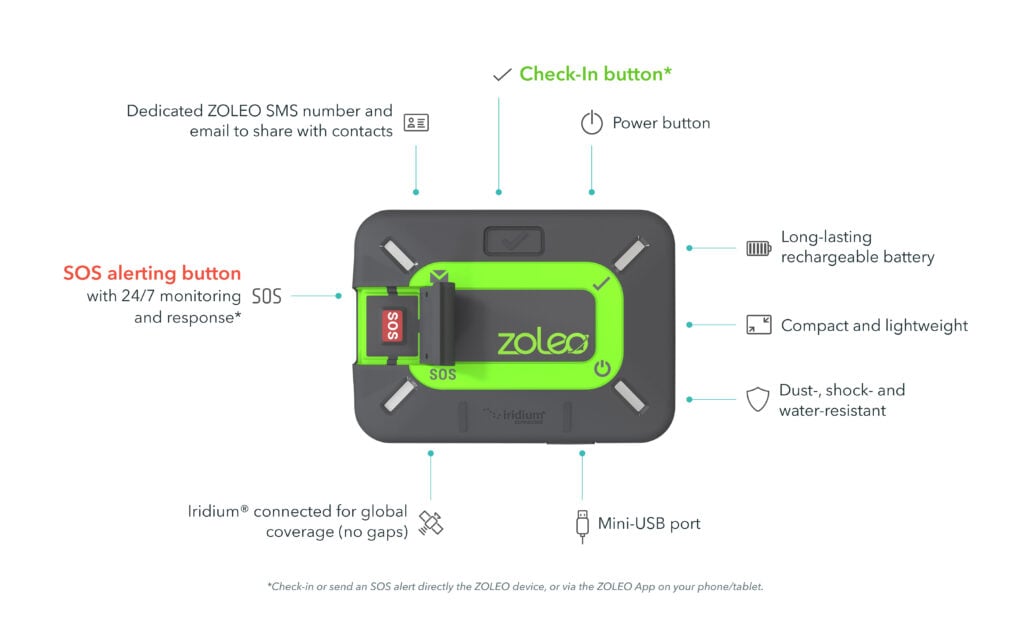
The ZOLEO enables two-way satellite messaging in addition to SOS capability. Suitable for remote workers who need ongoing check-in capability and two-way communication in areas without mobile coverage. Subscription plan required for messaging features.
View the full emergency beacon range →
Personal Safety Alarms for Everyday Carry
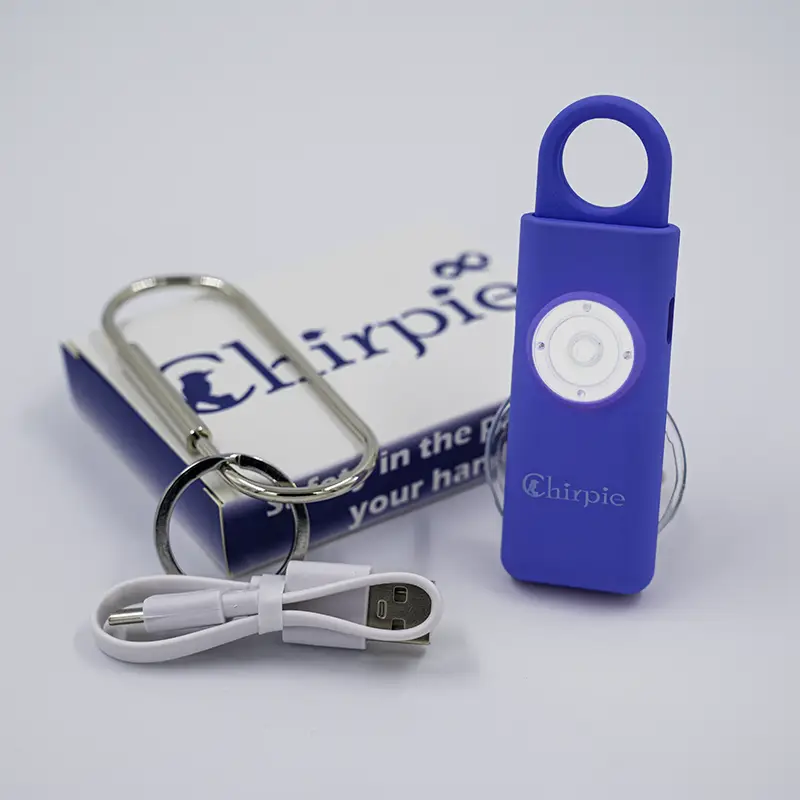
For personal safety on the street, commuting, or in situations where a loud deterrent is needed, Safe-Life’s Chirpie range provides 130dB personal safety alarms. No subscription, no programming — pull the pin or press the button to activate.
| Product | Price | Key feature | Link |
|---|---|---|---|
| Chirpie | $29.99 | Pull-ring activation, 130dB siren, strobe, CR2032 battery (up to 1 year standby) | Shop Chirpie → |
| Chirpie Infinity | $39.99 | USB-C rechargeable, 130dB siren, strobe, quick-release ring | Shop Chirpie Infinity → |
| Chirpie Infinity Fusion | $39.99 | Attached pin that stays connected to the alarm — can’t be dropped in a panic. USB-C rechargeable. | Shop Infinity Fusion → |
| Chirpie Link | $44.99 | 130dB siren + smartphone SOS integration — automatically calls emergency services and shares live GPS location | Shop Chirpie Link → |
Case studies: Chirpie used by Aussie Locums healthcare staff → | Staff safety alarms for retail workers →
Frequently Asked Questions About Duress Alarms
What is a duress alarm?
A duress alarm is a device that allows a person to silently or discreetly call for help when they feel threatened, are in danger, or have had a medical emergency. Unlike standard emergency calls, duress alarms are designed to summon assistance without alerting an aggressor or drawing attention to the person activating the alarm. They are used by lone workers, elderly people living alone, healthcare staff, and anyone who may face a sudden safety situation without the ability to make a conventional phone call.
What is the difference between a duress alarm and a panic button?
The terms are often used interchangeably. A panic button is typically a fixed device installed at a specific location — such as a reception desk or under a counter. A duress alarm more commonly refers to a wearable or portable device carried by an individual. Both serve the same purpose — silent, immediate alerting — but the right choice depends on whether the person who needs protection is stationary or mobile.
Are duress alarms required by law in Australian workplaces?
The Work Health and Safety Act 2011 requires PCBUs to eliminate or minimise risks to worker health and safety so far as is reasonably practicable. Safe Work Australia specifically identifies providing duress alarms or alert systems as a control measure for lone workers and workers at risk of aggression or violence. While the Act does not mandate a specific device type, failure to provide adequate protection where a foreseeable risk exists constitutes a breach of the duty of care. WorkSafe Victoria and equivalent state regulators actively enforce these obligations.
How does a duress alarm work?
When activated — either by pressing a button or through automatic fall detection — a duress alarm sends an alert through its communication pathway. Wearable 4G devices like the Safe-Life pendant send SMS messages with a Google Maps location link to pre-programmed contacts and then place sequential phone calls until someone answers. Fixed call-point systems send a signal to a pager or annunciator display located elsewhere in a facility. Satellite beacons transmit a distress signal to the international COSPAS-SARSAT satellite system, alerting Australian Search and Rescue.
What is the best duress alarm for a GP clinic or medical practice?
Safe-Life recommends the Sentinel Wireless Call System for most clinical settings. It requires no cable installation, uses hospital-grade POCSAG wireless technology, and can be configured with fixed call-points at reception and in consult rooms alongside wearable staff pendants. For smaller practices, the Pendant to Pager Kit at $477 provides a reliable, subscription-free option. Contact Safe-Life on 03 9588 0392 for a free needs assessment — we provide on-site assessments for Melbourne-area facilities.
Can I buy a duress alarm using NDIS funding?
Yes. Safe-Life is a registered NDIS provider (Provider Number: 4050109546). The 4G pendant and Falls Detection Watch are both eligible as assistive technology. At $497, both fall within the low-cost AT threshold, meaning many participants can access them through Core Supports without a formal OT assessment. Safe-Life issues NDIS-compliant invoices for plan-managed and self-managed participants. Learn more about NDIS funding at Safe-Life →
Do Safe-Life duress alarms require a monthly subscription?
The Safe-Life 4G pendant and watch include a Telstra-managed SIM with $66 credit on a 365-day plan — there are no monthly fees. Annual SIM renewal is $66. The Pendant to Pager Kit and Caregiver Call Button Kit use RF wireless and require no SIM or subscription at all.
What is a silent duress alarm?
A silent duress alarm activates without making an audible sound at the point of activation — the alert is sent to a pager, monitoring centre, or emergency contacts without alerting the person causing the threat. The Safe-Life 4G pendant sends alerts silently via SMS and sequential calling. Fixed call-points in the Sentinel clinic system can be configured for silent or audible operation depending on the application.
What is the difference between a duress alarm and a personal alarm?
A personal alarm is typically used by elderly people or individuals who may need assistance in a medical emergency — for example, following a fall or health event. A duress alarm is used specifically when a person faces a threat from another person, such as aggression or violence. Many devices, including the Safe-Life 4G pendant and watch, serve both purposes — they can be activated manually as a duress alarm or triggered automatically by fall detection as a personal alarm.
What is a man-down alarm?
A man-down alarm, also called a man-down device or no-movement alarm, automatically detects when a worker has stopped moving for an extended period — indicating they may have had a fall, medical event, or become incapacitated. The Safe-Life 4G pendant includes inactivity monitoring that triggers an alert if no movement is detected for a set time period. This is particularly relevant for lone workers in remote or hazardous environments. View the lone worker alarm →
Safe-Life — NDIS Registered Assistive Technology Provider
Safe-Life (Alerting Devices Australia Pty Ltd) has supplied emergency alerting devices to Australian healthcare facilities, aged care providers, community organisations, and families for over a decade. All devices are RCM marked and EESS registered, with local support from our Melbourne team.
- ABN: 67 637 195 941
- NDIS Provider Number: 4050109546
- Address: 5/270 Lower Dandenong Rd, Mordialloc VIC 3195
- Phone: 03 9588 0392
- Email: ua.moc.efilefas@selas
Not sure which system is right for your situation? Call us during business hours or submit an enquiry and we’ll respond within one business day. On-site assessment available for nurse call and clinic systems in the Melbourne area.
Request a quote → |
Contact us → |
NDIS funding information →