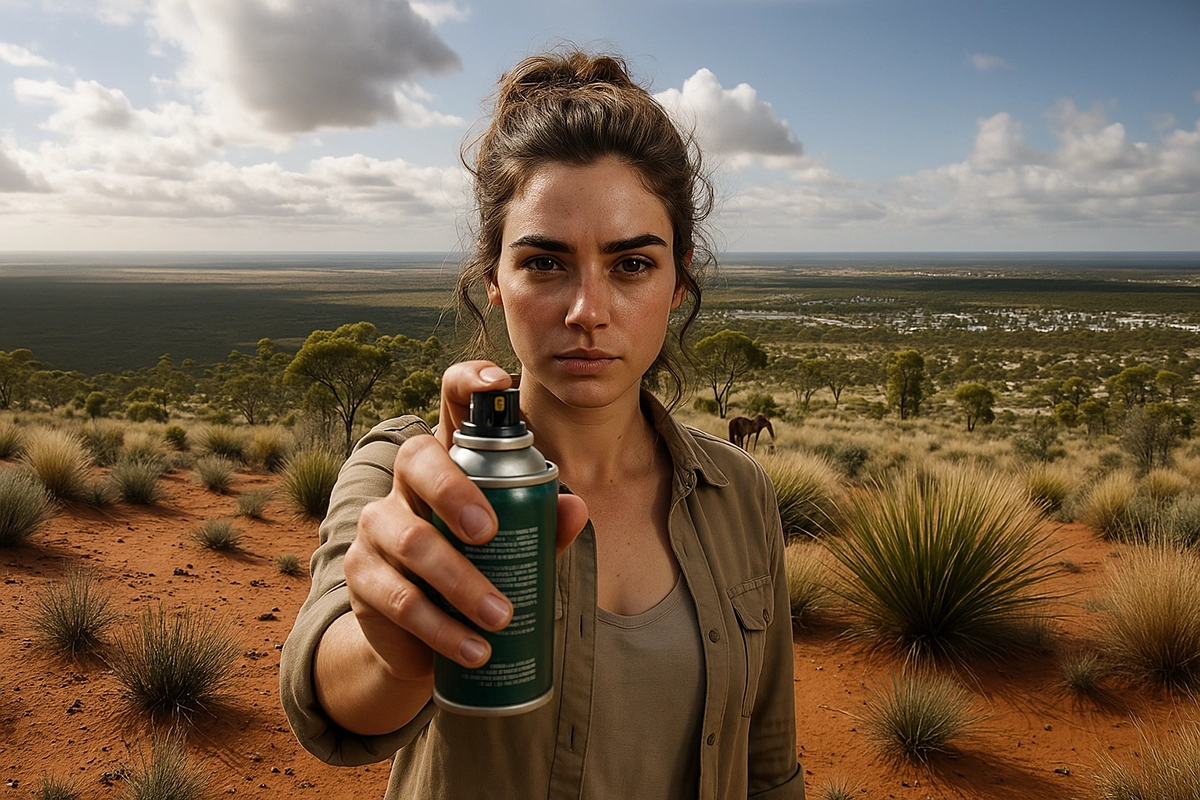
Pepper spray is illegal for civilians in most Australian states and territories. Western Australia is the only state where it is broadly legal to carry. The Northern Territory began a 12-month public trial in September 2025. Everywhere else — Victoria, Queensland, New South Wales, South Australia, Tasmania, and the ACT — pepper spray is classified as a prohibited or banned weapon carrying serious criminal penalties. If you are looking for a legal alternative, personal safety alarms are the most practical option available across all of Australia.
Is pepper spray legal in Australia? Quick reference by state
| State / Territory | Legal for civilians? | Quick summary |
|---|---|---|
| Western Australia | ✅ Legal (controlled weapon) | Permitted with reasonable grounds |
| Northern Territory | ⚠️ Trial only | 12-month trial from 1 September 2025 |
| Queensland | ❌ Illegal | Prohibited weapon — up to 7 years’ imprisonment |
| Victoria | ❌ Illegal | Banned weapon — up to 2 years’ imprisonment |
| New South Wales | ❌ Illegal (permit possible) | Permit required; rarely granted to civilians |
| South Australia | ❌ Illegal | Up to 18 months / $7,500 fine |
| Tasmania | ❌ Illegal | Up to 2 years unless lawful excuse |
| ACT | ❌ Illegal | Up to 5 years’ imprisonment |
What are pepper spray laws in Australia based on?
Pepper spray is classified under weapons legislation in each state and territory. There is no single national law. Each jurisdiction defines pepper spray — also called OC spray (Oleoresin Capsicum) or capsicum spray — under its own prohibited or controlled weapons framework. The classification determines whether possession, carriage, or use is permitted, and what penalties apply.
Penalties range from fines to imprisonment depending on the jurisdiction and the circumstances of the offence. Unlawful possession and unlawful use are treated as separate offences in most states.
Why does this matter for Australians?
Many Australians — particularly women, lone workers, and people in rural or isolated areas — seek accessible personal safety options. Pepper spray is widely used in other countries for self-defence, which leads many people to search for whether it is available here. The answer depends entirely on which state or territory you are in. Carrying pepper spray without legal authorisation, even for self-defence, can result in criminal charges across most of Australia.
Pepper Spray Laws by State: A Deeper Look
Is Pepper Spray Legal in WA?
In Western Australia, pepper spray is deemed legal and is considered a controlled weapon instead of a prohibited weapon under the Weapons Act 1999 (WA). This means it can be carried in Perth or elsewhere in Western Australia for self-defence purposes, given there are reasonable grounds to expect its need.
This could apply to individuals with legitimate concerns about assault or intimidation — for example, those who have previously been victims of violent crimes committed by known individuals. There is no formal permit required, but carrying pepper spray without a reasonable grounds justification may expose you to prosecution.
Is Pepper Spray Legal in QLD?
No. In Queensland, pepper spray is classified as a prohibited weapon under the Weapons Act 1990 (QLD), making it illegal to carry for self-defence.
Under section 50(1) of the Act, the maximum penalty for possession or use of pepper spray is a 7-year jail term or 300 penalty units. Pepper spray is classified as a firearm under Schedule 2 of the same Act — specifically any object capable of discharging a noxious, corrosive, or irritant substance that can cause injury or death.
Section 35 of the Weapons Act 1990 requires a valid licence and registration to possess pepper spray lawfully. Acquiring pepper spray without the required permit can lead to a 2-year prison sentence or 100 penalty units. A legitimate reason is required to obtain a licence. Legitimate reasons under section 11 of the Act include sport or target shooting, recreational activities, job-related needs, or weapon collection — not civilian self-defence.
As of April 2026, despite public debate and calls from some Queensland lawmakers to allow pepper spray following the NT trial, no changes to Queensland law have been made. Pepper spray remains a prohibited item in this state.
Is Pepper Spray Legal in Victoria?
No. Pepper spray is a banned weapon under the Control of Weapons Act 1990 (Vic) and the Control of Weapons Regulations 2021 (Vic). Possession or use is unlawful without an exemption from the Chief Commissioner or the Governor in Council.
Pepper spray is classified as a banned weapon in Victoria. The list of prohibited weapons includes any capsicum spray designed or modified to release an offensive, harmful, or irritating liquid, powder, gas, or chemical with the intent to disable, incapacitate, or harm another individual.
The maximum penalty for possessing or using pepper spray in Victoria, under section 5AA of the Control of Weapons Act 1990 (Vic), is a 2-year jail term or 240 penalty units (over $48,000 in 2025). This applies in Melbourne and across the state.
Is Pepper Spray Legal in NSW?
In New South Wales, a pepper spray permit can be issued under the Weapons Prohibition Act 1998 (NSW), but obtaining one is not straightforward. It requires a legitimate reason and a thorough background check. Permits are not issued for civilian self-defence. Misuse of a permit can lead to severe penalties, including fines and imprisonment.
How to Obtain a Pepper Spray License in New South Wales
Whether for dramatic displays, artifact assembly for a museum, wildlife control, or scientific exploration, the Commissioner may still deny a permit even if the stated reason qualifies, if any of the following apply:
- Over the past decade, you have been convicted of a specified crime, including but not limited to firearms or weapon possession, drug-related crimes, public disorder or attacks on law enforcement, stalking, abduction, actual bodily harm leading to penalties such as imprisonment, community service orders, good behaviour bonds, or fines exceeding $500, sexual offences, fraud, theft, dishonesty, robbery, affray, terrorism, involvement with criminal organisations or consorting.
- In the past ten years, you have been or are currently under an Apprehended Violence Order (unless the AVO has been revoked).
- You are currently under a good behaviour bond, Community Correction Order, or conditional release order stemming from any of the listed offences.
- You are under a weapons prohibition order.
- You are a person who must register according to the Child Protection (Offenders Registration) Act 2000.
- The Commissioner believes that you pose a threat to public safety and issuing a permit would be against the public interest, based on any criminal intelligence report or other information available.
According to Section 12 of the Weapons Prohibition Act 1998 (NSW), the following offences apply:
- If a permit to own or use pepper spray is issued for a genuine reason and that reason ceases to exist, the permit holder must notify the Commissioner in writing within seven days.
- Possessing or using pepper spray for any purpose other than the genuine reason the permit was granted is illegal.
- Both offences carry a maximum penalty of a $5,500 fine.
New South Wales offers an amnesty period for surrendering prohibited weapons. It is advisable to seek legal advice before attempting to surrender or dispose of a prohibited weapon.
Is Pepper Spray Legal in South Australia?
No. South Australia prohibits the possession or use of pepper spray, classifying it as a dangerous article under the Summary Offences Act 1953 (SA) and the Summary Offences Regulations 2016 (SA). The term encompasses self-protecting sprays — devices meant to temporarily or permanently disable or harm individuals through the release of an offensive or irritant substance.
The maximum penalty under section 21C(2) of the Summary Offences Act 1953 (SA) is 18 months’ imprisonment or a $7,500 fine. Penalties increase to 2 years’ imprisonment or a $10,000 fine if the offence occurs on or near licensed premises, under section 21C(3).
Is Pepper Spray Legal in Tasmania?
No. Pepper spray possession and use in Tasmania is illegal under section 15C(1) of the Police Offences Act 1935 (Tas) unless a lawful excuse applies. Lawful excuses include involvement in legal sports, recreation, or entertainment; lawful collection, display, or exhibition; religious practices; or pursuing a lawful job, duty, or activity. Personal self-defence is not a recognised lawful excuse. The maximum penalty is a 2-year jail term and/or 50 penalty units. This law does not apply to police officers or anyone with a written exemption from the Commissioner.
Is Pepper Spray Legal in the Northern Territory?
Historically, the Northern Territory (NT) treated pepper spray the same as most other Australian jurisdictions — it was considered a prohibited weapon under the NT’s Weapons Control Act 2001, making it illegal for personal use. However, the NT is now conducting a 12-month trial allowing members of the public to legally carry pepper spray for self-defence, under strict conditions.
From 1 September 2025, the NT Government began a trial program under which eligible adults can purchase, possess, and carry OC spray (pepper spray) for personal security pfes.nt.gov.au. This makes the NT the second Australian jurisdiction (after WA) to permit civilian use of pepper spray. The trial has specific rules:
- Eligibility: You must be 18 years or older, present valid photo ID, and complete a “Buyer Declaration” at the point of purchase pfes.nt.gov.au. By signing the declaration, you affirm that you have no disqualifying criminal history, no current domestic violence orders, and are not otherwise prohibited from possessing the spray pfes.nt.gov.au.
- Purchase: Pepper spray can only be bought in-person from approved NT firearms dealers. Only government-authorised “Declared OC Spray Dealers” can sell it to the public pfes.nt.gov.au. Online purchase or purchase from out-of-territory sources is not permitted.
- Proof of eligibility: You must carry the signed Buyer Declaration (physical or digital copy) whenever carrying the pepper spray pfes.nt.gov.au. If a police officer requests it and you cannot produce it, the spray may be confiscated.
- Carry restrictions: The canister must be kept concealed (out of public view) at all times abc.net.au. A maximum of 2 cans may be carried at any one time.
- Misuse and penalties: Misuse of OC spray remains a criminal offence under the NT’s Weapons Control Act 2001 pfes.nt.gov.au. The spray may only be used to prevent an attack or threat. Standard self-defence laws apply — only reasonable force is permitted.
- Duration of trial: The trial runs for 12 months from 1 September 2025. The NT Government will collect public feedback and assess outcomes before deciding whether to make the change permanent pfes.nt.gov.au abc.net.au.
This legality applies only within the Northern Territory. Pepper spray purchased in the NT cannot be taken interstate abc.net.au. It also cannot be carried on planes or through airports anywhere in Australia abc.net.au.
As of April 2026, the trial is ongoing. The NT Government will decide at the end of the trial period whether to make pepper spray legal permanently, modify the program, or end it.
Is Pepper Spray Legal in the ACT (Australian Capital Territory)?
No. Under the Prohibited Weapons Act 1996 (ACT), any defence or anti-personnel spray capable of discharging irritant substances — including oleoresin capsicum (pepper spray) — is listed as a prohibited weapon legislation.act.gov.au. Pepper spray is illegal to possess or use for self-defence in the ACT unless the individual holds a specific permit or exemption, which is not available to ordinary civilians.
The maximum penalty for unauthorised possession or use of a prohibited weapon in the ACT is 500 penalty units or 5 years’ imprisonment (or both) legislation.act.gov.au.
Alternatives to Pepper Spray in Australia
Given the legal restrictions on pepper spray in most parts of Australia, it is important to understand what alternatives are legal and provide a genuine sense of security.
| Alternative | Legal across Australia? | Notes |
|---|---|---|
| Personal safety alarm | ✅ Yes | Loud audible alert; no permit required |
| Tactical flashlight | ✅ Yes | High-lumen; can temporarily disorient; legal to carry |
| Safety app (smartphone) | ✅ Yes | GPS alert, siren function, emergency contacts |
| Whistle | ✅ Yes | Simple, legal, effective for attracting attention |
| Self-defence training | ✅ Yes | Krav Maga, Brazilian Jiu-Jitsu, and similar disciplines |
| Stun gun / taser | ❌ No | Prohibited weapons in almost all Australian jurisdictions |
| Mace / tear gas | ❌ No | Prohibited weapons across Australia |
Airhorn
An airhorn is one legal option. The loud noise it produces can attract attention and potentially deter a threat. Personal safety alarms work on the same principle — emitting a high-pitched sound that can be heard from a distance. These devices are legal to carry in all states and territories. A tactical flashlight is another option: it can illuminate dark areas and temporarily disorient an attacker if directed at their eyes.
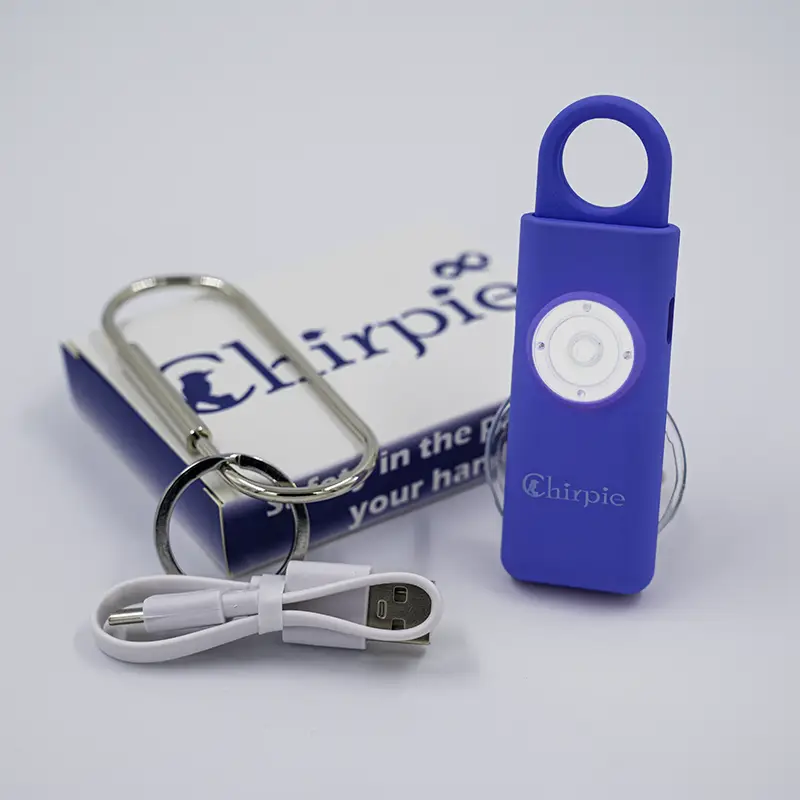
Chirpie
Chirpie is a small, wearable personal safety alarm that emits a loud, shrill noise when activated, designed to deter a potential threat and attract attention. Available in battery-operated and rechargeable versions, Chirpie — the personal panic alarm — is completely legal to carry and use across all of Australia.
Other Self-Defence Tools and Their Legality in Australia
When considering self-defence options, it is important to understand the legal status of various tools in your state or territory.
Is Mace Legal in Australia?
“Mace” is often used interchangeably with “pepper spray.” Traditional mace is a tear-gas-based irritant rather than a capsicum spray. In Australia, mace is treated as a prohibited weapon in the same way as pepper spray across all states and territories.
Can I Carry a Taser in Australia?
No. Tasers and stun guns are prohibited weapons in almost all Australian jurisdictions. Possession without a lawful authority — such as a law enforcement role — is a criminal offence. Do not assume that devices marketed as “stun torches” or similar products are exempt without verifying your state or territory’s specific legislation.
Are Self-Defence Keychains Legal in Australia?
Self-defence keychains occupy a grey area. While they are not explicitly banned, any device designed to cause harm could be treated as a prohibited or controlled weapon under Australian law. Check your state or territory’s weapons legislation before purchasing or carrying one. Personal safety keyrings typically include a mini alarm, and in some cases a sharp point for striking or a small defensive spray.
What Self-Defence Items Are Legal in Australia?
Given the legal restrictions on many self-defence items, the most reliable legally available options are personal alarms, tactical flashlights, safety apps, and self-defence training. Situational awareness — being alert to your surroundings and avoiding potentially unsafe environments — remains the most effective baseline for personal safety.
Conclusion: Why is pepper spray illegal in Australia
Pepper spray is illegal for civilians in six of Australia’s eight states and territories. Western Australia permits it as a controlled weapon with reasonable grounds. The Northern Territory is running a 12-month trial until late 2026. Everywhere else, possession carries criminal penalties ranging from fines to imprisonment.
For Australians seeking a legal, practical personal safety option, personal safety alarms — including wearable devices like Chirpie — are available without a permit in every state and territory. Stay informed, check your local laws, and choose options that keep you protected and compliant.
This article provides general information about Australian weapons legislation as it applies to pepper spray. It is not legal advice. Laws change. Always verify current legislation in your state or territory with a legal professional or the relevant police service.