Introduction
This case study describes how a large Australian retailer addressed frontline staff safety risks by deploying Safe-Life Chirpie personal alarms. The retailer faced increasing customer aggression and safety concerns among frontline staff. Safe-Life Australia supplied and supported a national rollout of personal safety alarms as part of a broader Workplace Health & Safety strategy.
What challenge needed solving?
The retailer operates large-format retail environments with extended trading hours and high customer volumes. Staff working in customer service, checkout, and night-fill roles were experiencing increased exposure to aggressive behaviour and safety-related anxiety.
Existing controls such as training and in-store security were not always sufficient to allow staff to quickly attract assistance during incidents. Previously tested personal safety devices were found to be inconsistent in volume, unreliable, or difficult to activate under stress.
The retailer required a simple, reliable, and legally appropriate personal safety device that staff could activate instantly in threatening situations.
Why was Safe-Life selected?
- Proven experience supplying personal safety alarms in Australian workplaces
- Simple pull-pin activation requiring minimal training
- High-audibility alarms suitable for large retail environments
- Availability of both battery-powered and rechargeable models
- Ability to meet manufacturing and delivery timelines at national scale
What solution was implemented?
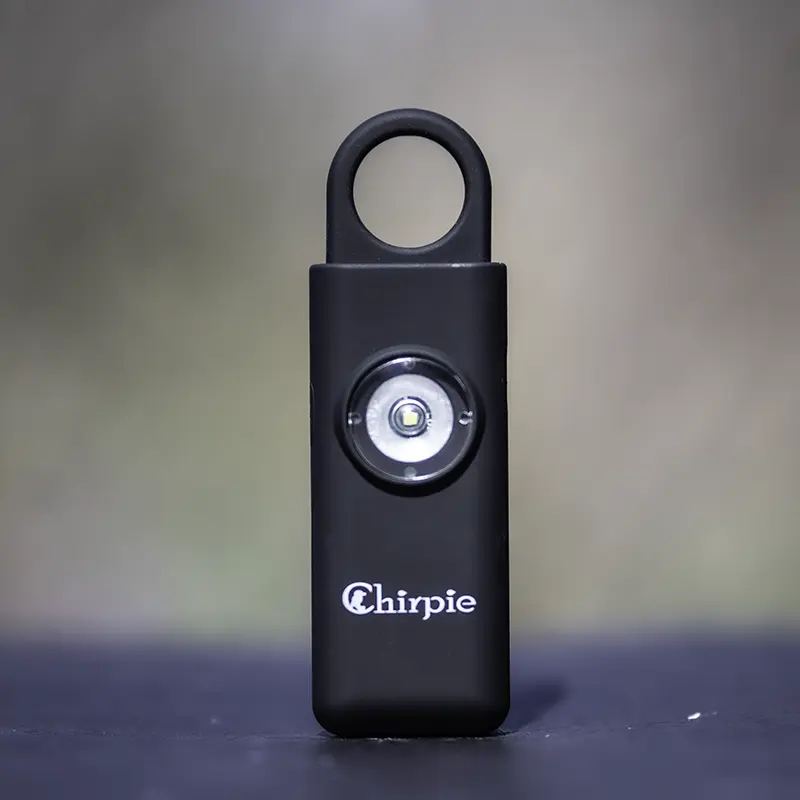
Safe-Life supplied Chirpie personal safety alarms for staged evaluation and national deployment.
- An initial pilot deployment was conducted in selected higher-risk stores to support internal risk assessment processes.
- Safe-Life provided technical documentation addressing device operation, durability, and audible output considerations.
- Both the Chirpie Personal Safety Alarm and the Chirpie Infinity Personal Alarm were evaluated.
- Following evaluation, more than 20,000 devices were manufactured and delivered for national rollout.
- Devices were issued as part of standard staff equipment, with store managers briefed on handling and battery or charging requirements.
Chirpie personal alarms feature a high-output audible siren, mechanical pull-pin activation, and compact form factor suitable for lanyards or uniform attachment.
What improvements were observed?
Due to confidentiality requirements, detailed internal incident statistics were not provided externally. However, Safe-Life received consistent qualitative feedback from the retailer and publicly available staff commentary.
- Staff reported increased confidence when working late or in isolated areas
- Alarms were used to attract immediate attention from nearby staff during incidents
- Activation of alarms was reported to deter aggressive behaviour in some situations
An independently posted comment from a staff member stated that the alarm helped them feel safer when leaving work at night.
Key Data Summary
| Feature | Detail |
|---|---|
| Client Type | Large Australian retailer |
| Problem Type | Staff safety and customer aggression risk |
| Environment | Retail stores, including late-night trading |
| Solution Type | Personal safety alarms |
| Devices Supplied | Chirpie Personal Safety Alarm and Chirpie Infinity |
| Deployment Scale | 20,000+ devices nationally |
| Outcome | Improved staff confidence and incident visibility |
Summary
This case study demonstrates how a large Australian retailer integrated Safe-Life Chirpie personal alarms into its workplace safety framework. Through a staged evaluation and national rollout, the retailer provided frontline staff with a simple and reliable method to attract assistance during safety incidents. The project highlights the role of practical personal safety technology in supporting WHS obligations across large retail environments.