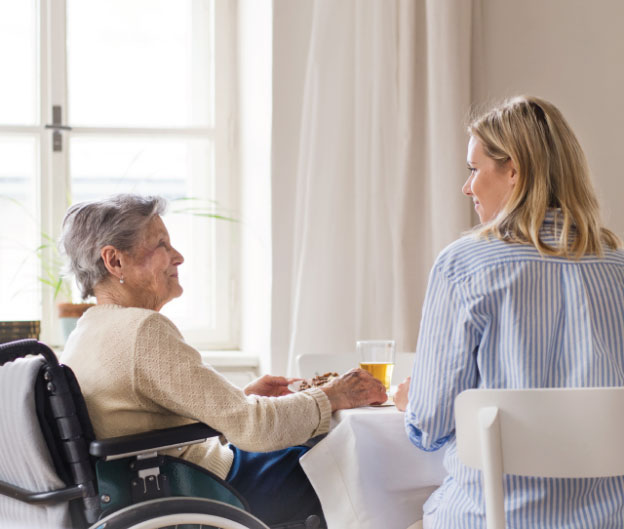
In Australia, this matters because most people prefer to age in place, and pathways such as Support at Home and the NDIS influence how equipment and home modifications are assessed and funded.
Safe-Life supplies personal alarms, bed and chair monitoring systems, and related assistive technology used in home and care settings, so this guide focuses on practical selection, safe setup, and realistic maintenance.
What is independent living aids and assistive technology for seniors?
“Assistive technology” is an umbrella term for products, equipment, and related systems that help maintain or improve functioning and independence.
In Australian aged care, My Aged Care describes assistive technology and home modifications as products, equipment, and changes to your house that help you live at home or in the community.
Independent living aids for home sit on a spectrum:
- Low complexity items such as simple kitchen aids, reachers, or touch lighting.
- Moderate complexity items such as medication organisers or basic alerting devices.
- Higher complexity or higher risk items such as customised bathroom solutions, some mobility equipment, or monitoring systems requiring structured setup.
The NDIS distinguishes low risk assistive technology from higher risk items, noting that higher risk AT may require professional advice, setup, or training.
That is why a needs-first approach works better than buying the most advanced device available.
Many of these principles also apply to devices to assist people with disabilities of any age.
The goal is the same: safe function, predictable support, and reduced reliance on constant supervision.
Why does assistive technology for seniors matter for Australians?
Australia’s aged care system increasingly supports care at home.
Under Support at Home, assistive technology and home modifications can form part of a structured support plan.
The Assistive Technology and Home Modifications (AT-HM) pathway allows assessment-based approval of equipment and environmental changes.
For people with disability, the NDIS assistive technology pathway applies different eligibility and evidence rules.
The device may look similar.
The funding logic may not be.
Technology for ageing in place works best when it removes a specific barrier.
It does not replace care.
It supports safer routines and faster response.
Which parts of the home benefit most from independent living aids for home?
Bathrooms and toilets
Wet areas increase slip risk and transfer difficulty.
Grab rails, level-access showers, and shower chairs are commonly included within AT-HM examples.
Entryways and hallways
Ramps, non-slip surfaces, and improved lighting can remove everyday barriers.
Small environmental changes often provide significant independence gains.
Bedrooms and living areas
Bed height, chair height, and night navigation are common friction points.
Monitoring systems such as bed and chair alerts can assist where supervision is required.
Safe-Life provides facility and home-based solutions including bed alarms for the elderly and chair alarm systems used in care settings.
Kitchens and laundries
Adapted utensils, jar openers, and stable cutting boards reduce grip strain and fatigue.
These are typically low risk and easy to trial.
Which assistive devices for independent living are most useful day to day?
The most useful assistive devices for independent living usually cover predictable moments:
mobility, self-care, medication, and emergency contact.
- Mobility supports such as walking frames or transfer aids.
- Daily living aids such as dressing aids or reachers.
- Medication management tools such as reminder systems.
- Alerting and monitoring devices such as personal alarms or bed sensors.
For emergency communication, wearable alarms remain common.
Safe-Life supplies personal emergency response devices including Falls Detection Watch Medical Alert systems and other mobile personal alarms used in home and community environments.
These devices are not substitutes for care.
They are supplementary tools designed to shorten response time.
Comparison table
| Device Type | Primary Goal | Complexity Level | Professional Input Often Required? |
|---|---|---|---|
| Daily living aids | Reduce strain in everyday tasks | Low | Usually no |
| Bathroom supports | Improve transfer safety | Moderate | Often yes |
| Home modifications | Remove environmental barriers | Moderate to high | Yes |
| Mobility equipment | Improve safe movement | Moderate to high | Often yes |
| Personal alarms and monitoring | Enable rapid help-seeking | Low to moderate | Setup guidance recommended |
How does technology for ageing in place change care and privacy?
Connected devices introduce new responsibilities.
Charging, testing, and maintaining connectivity become part of the care routine.
Safe-Life product documentation states that some devices rely on active SIM accounts, network availability, and charged batteries, and should not be considered life-saving devices in isolation.
Privacy also becomes part of safety.
The Office of the Australian Information Commissioner recommends reviewing privacy settings, using strong passwords, and keeping devices updated.
Monitoring should be transparent and consent-based.
How do NDIS and Support at Home funding pathways apply in Australia?
Under Assistive Technology and Home Modifications (AT-HM), approved assistive technology and home changes can be funded separately from ongoing care services.
The NDIS requires that funded supports relate directly to disability needs and meet reasonable and necessary criteria.
Eligibility and approval processes differ from aged care pathways.
Funding affects not only purchase decisions but also service arrangements, installation, and long-term maintenance.
How do you choose, trial and maintain the best tech for senior independence?
- Define a clear functional goal.
- Measure the environment accurately (clearances in mm, transfer heights).
- Start with the lowest complexity solution that solves the problem.
- Confirm who is responsible for charging, testing, and updates.
- Document privacy and consent where monitoring is involved.
- Review after real-world use.
The best tech for senior independence is dependable, understandable, and maintained consistently.
Feature count is irrelevant if the device is not used.
How do these solutions work?
Most assistive technologies follow a basic pattern:
trigger, mechanism, outcome.
- Trigger: A need arises, such as a transfer, fall risk, or help request.
- Mechanism: The device changes the environment or sends an alert.
- Outcome: The task becomes safer or assistance is mobilised faster.
- Limitation: Incorrect setup, inconsistent charging, or unclear response pathways reduce effectiveness.
Who benefits?
- Older adults living alone.
- People with mobility challenges.
- NDIS participants requiring assistive technology.
- Carers and family members seeking clearer escalation pathways.
- Home care providers supporting ageing in place.
Conclusion – independent living aids for home
Independent living aids for home are most effective when matched to a specific barrier or risk.
Support at Home and the AT-HM scheme provide structured funding pathways in aged care, while the NDIS applies to disability-related needs.
Assistive technology for seniors overlaps with devices to assist people with disabilities.
The difference is often in funding rules rather than the device itself.
Technology for ageing in place should be part of a broader independence plan.
Understand dependencies.
Maintain devices properly.
Treat privacy as part of safety.
Safe-Life contributes to this landscape by supplying personal alarms and monitoring systems used in Australian homes and care settings.
References
- Australian Government Department of Health and Aged Care, “About the Support at Home program” https://www.health.gov.au/our-work/support-at-home/about
- My Aged Care, “Support at Home program” https://www.myagedcare.gov.au/aged-care-programs/support-at-home-program
- My Aged Care, “Assistive Technology and Home Modifications (AT-HM) scheme” https://www.myagedcare.gov.au/aged-care-programs/assistive-technology-and-home-modifications-scheme
- National Disability Insurance Scheme, “Assistive technology explained” https://www.ndis.gov.au/participants/assistive-technology-explained
- Office of the Australian Information Commissioner, “Reboot your privacy and protect your personal information online” https://www.oaic.gov.au/privacy/your-privacy-rights/social-media-and-online-privacy/reboot-your-privacy-and-protect-your-personal-information-online
- World Health Organization, “Assistive technology” https://www.who.int/news-room/fact-sheets/detail/assistive-technology