This case study outlines how Aveo addressed lone-worker safety risks across its national retirement living and homecare operations by deploying a monitored lone-worker personal alarm solution supplied by Safe-Life Australia. The challenge involved staff working in isolation across multiple environments, and the solution focused on 4G GPS-enabled personal alarms with professional monitoring.
What challenge needed solving?
Aveo operates retirement villages and homecare services across Queensland, New South Wales, Victoria, and Tasmania. As part of a workplace safety review, Aveo identified that a significant number of staff were regularly working alone or in uncontrolled environments.
These roles included:
- Homecare workers attending private residences
- Village staff performing after-hours duties
- Wellness coordinators conducting solo checks
- Maintenance staff covering large village grounds
Key risks identified included:
- Falls or medical incidents occurring without immediate assistance
- Exposure to aggressive behaviour during dementia-related care
- Limited visibility of staff location during travel or isolated work
- Delayed emergency response due to lack of direct escalation pathways
- Compliance obligations under the Work Health and Safety Act 2011 for isolated workers
Aveo required a nationally consistent solution that could operate across both community and village settings without adding operational complexity.
Why was Safe-Life selected?
Safe-Life was selected following a comparative assessment of available lone-worker safety solutions due to:
- Availability of 4G personal alarms suitable for mobile staff
- Integrated GPS and Wi-Fi location capability
- Support for professional 24/7 monitoring services
- Experience supplying safety technology into aged care and homecare environments
- Ability to align alert escalation with existing operational workflows
- National coverage suitable for a multi-state organisation
The solution also met internal WHS documentation and audit requirements.
What solution was implemented?
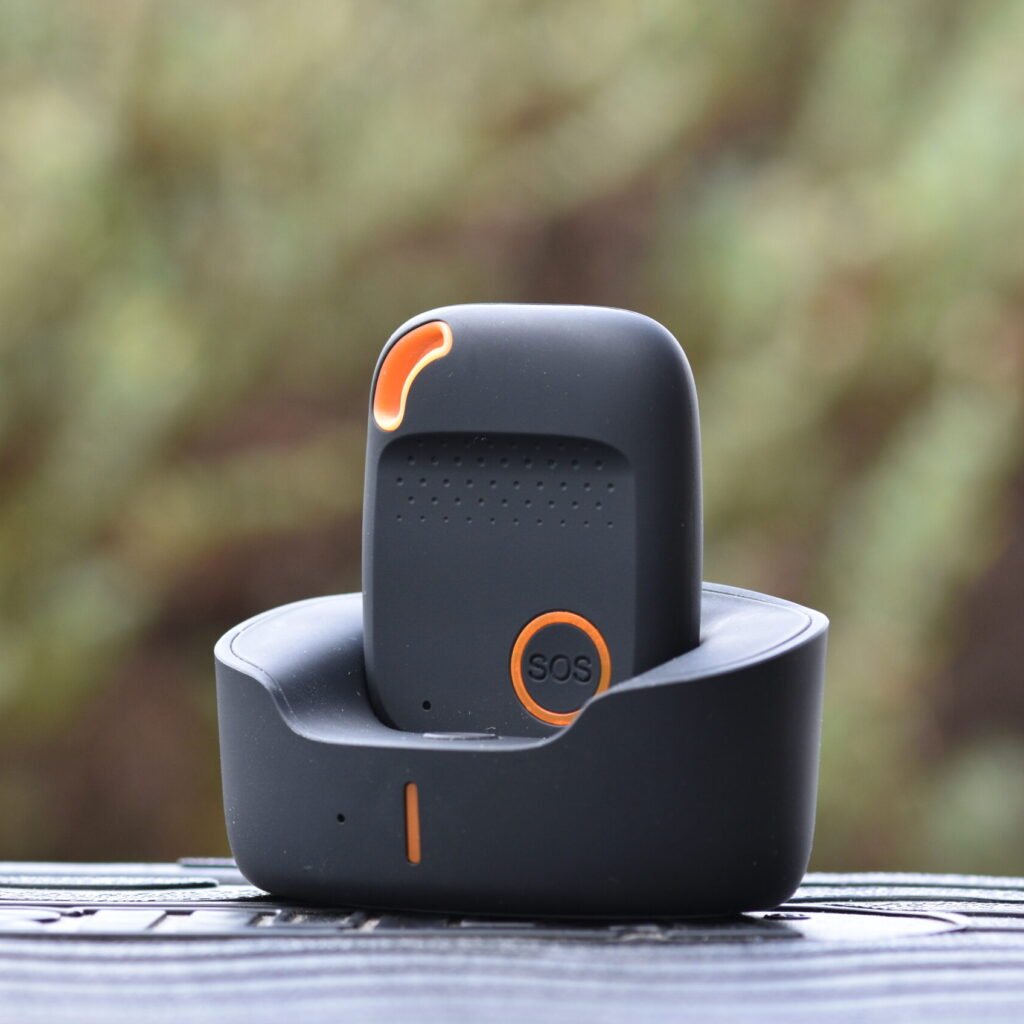
Safe-Life supplied 114 4G GPS-enabled lone worker personal alarms for deployment across Aveo’s homecare and village operations.
Implementation steps included:
- Risk mapping and role identification
Lone-worker roles were identified across 67 villages and homecare regions, with higher-risk positions prioritised for initial rollout. - Device configuration and escalation setup
Alert escalation pathways were programmed by region, aligning with village managers, care coordinators, and monitoring protocols. - Device features deployed
- SOS emergency activation
- Automatic fall detection
- Two-way voice communication
- GPS and Wi-Fi indoor location tracking
- Duress activation for discreet alerts
- Multiple wearing options including lanyard and belt clip
- Monitoring integration
Devices were connected to a professional 24/7 monitoring centre, with supervisors able to view alerts, locations, and device status online. - Staff training
Hands-on training sessions covered alarm activation, fall detection behaviour, charging routines, and escalation expectations.
The full rollout was completed within an eight-week implementation window.
What improvements were observed?
After twelve months of operation, Aveo reported the following outcomes:
- Faster emergency response compared with previous ad-hoc processes
- Successful response to fall detection alerts with timely intervention
- A duress incident escalated and resolved safely during a home visit
- Improved visibility of staff status and location for supervisors
- Clear documentation supporting WHS audits and compliance reviews
Staff feedback indicated increased confidence when working alone, particularly during home visits and after-hours duties.
Observed operational and workforce benefits
Following implementation, Aveo observed several operational and workforce-related benefits associated with the introduction of monitored lone-worker personal alarms. These observations were specific to Aveo’s operating environment and internal processes and were not presented as guaranteed or universal outcomes.
Over time, Aveo reported reduced disruption following incidents involving lone workers, supported by clearer escalation pathways and improved visibility for supervisors managing dispersed teams. The availability of monitored alerts and location information also assisted with incident follow-up and internal reporting.
Additional benefits were observed at a workforce level, with staff reporting increased confidence when undertaking solo duties across both homecare and village-based roles. These factors were considered alongside broader safety, compliance, and staff wellbeing objectives, rather than as standalone financial measures.
Key Data Table
| Feature | Detail |
| Problem Type | Lone worker safety and WHS compliance |
| Solution Type | 4G GPS personal alarm with fall detection |
| Environment | Homecare, retirement villages, community |
| Users | 114 homecare and village staff |
| Monitoring | 24/7 professional monitoring |
| Outcome | Improved response times and WHS visibility |
Conclusion
Aveo’s deployment of monitored lone-worker personal alarms addressed a clearly identified safety and compliance requirement across its retirement living and homecare operations. The solution provided a consistent approach to managing isolated work across a geographically dispersed workforce.
By implementing GPS-enabled personal alarms supported by professional monitoring and defined escalation processes, Aveo strengthened its ability to respond to incidents involving lone workers while maintaining alignment with internal WHS frameworks. The system now forms part of Aveo’s broader approach to workforce safety, risk management, and staff support.
Summary
Aveo required a consistent, scalable approach to managing lone-worker safety across a national operation. By deploying monitored 4G personal alarms supplied by Safe-Life Australia, Aveo strengthened its WHS framework, improved emergency response capability, and increased staff confidence when working in isolation. The solution now forms part of Aveo’s standard safety approach across its retirement living and homecare services.