1) Register with My Aged Care
Call My Aged Care on 1800 200 422 or use their website to register your parent and book an assessment. This starts the process for government support programs that can cover a personal alarm.
2) Attend the Assessment
An assessor will check your parent’s needs (mobility, safety, falls risk, daily tasks). Make it clear that your parent needs a personal alarm included in their support plan so funding can be allocated.
3) See Which Funding Route Applies
After the assessment, your parent may be eligible for one of the following:
National programs via My Aged Care
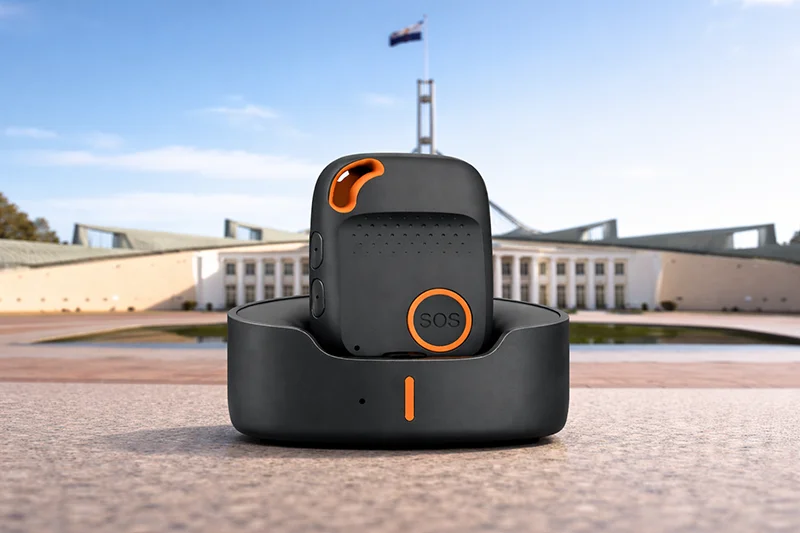
• Support at Home (SaH) or Commonwealth Home Support Program (CHSP) – provides basic support that can include personal alarms, such as the Safe-Life Pendant.
• Assistive Technology funding under SaH/AT-HM – can cover the cost of the device itself.
Other government funding
• NDIS – may fund assistive technology like alarms if your parent is under 65 and eligible for disability support.
• State schemes – such as Personal Alert Victoria (PAV) (free alarm and monitoring if your parent is eligible) or Personal Alert Assistance SA (PAASA).
• DVA (veterans) – may provide personal alarms through the Rehabilitation Appliances Program for eligible veterans.
4) Get Approval & Funding Code
Once your parent is found eligible, you’ll receive a referral or funding plan/code that confirms what the government will pay for.
5) Choose a Supplier & Set Up the Alarm
Provide the referral or funding code to an approved alarm supplier. They’ll organise the pendant for your parent and usually set up the 24/7 monitoring service.
6) Review & Renew as Needed
Some programs review support regularly. Stay in contact with your parent’s case manager to ensure funded monitoring and equipment remain active.
What Each Funding Option Does
| Program | Pays for Alarm Device | Pays for Monitoring | Who It Helps |
|---|---|---|---|
| Support at Home / CHSP | Yes (device) | Maybe (depends on plan) | Older Australians needing basic home support |
| AT-HM (Assistive Tech) | Yes (device) | No (monitoring may be funded through overall support plan) | Parents approved under Support at Home |
| NDIS | Yes (if in plan) | Yes (if in plan) | Under-65s with significant disability |
| Personal Alert Victoria (PAV) | Yes | Yes | Eligible Victorian seniors or people with disability |
| Personal Alert Assistance SA (PAASA) | Yes | Yes | Eligible South Australians |
| DVA (Veterans) | Yes | Yes | Veterans and eligible dependants |
Quick Tips
• Always start with My Aged Care – it’s the main entry point to federal aged-care support.
• If your parent lives in Victoria, check Personal Alert Victoria for potential access to a free device and monitoring.
• If your parent has a disability and is under 65, the NDIS may include a personal alarm as assistive technology.