This case study covers night-time epilepsy monitoring for a young adult living at home in Melbourne, Australia.
The family needed a way to detect nocturnal seizures without continuous in-room supervision.
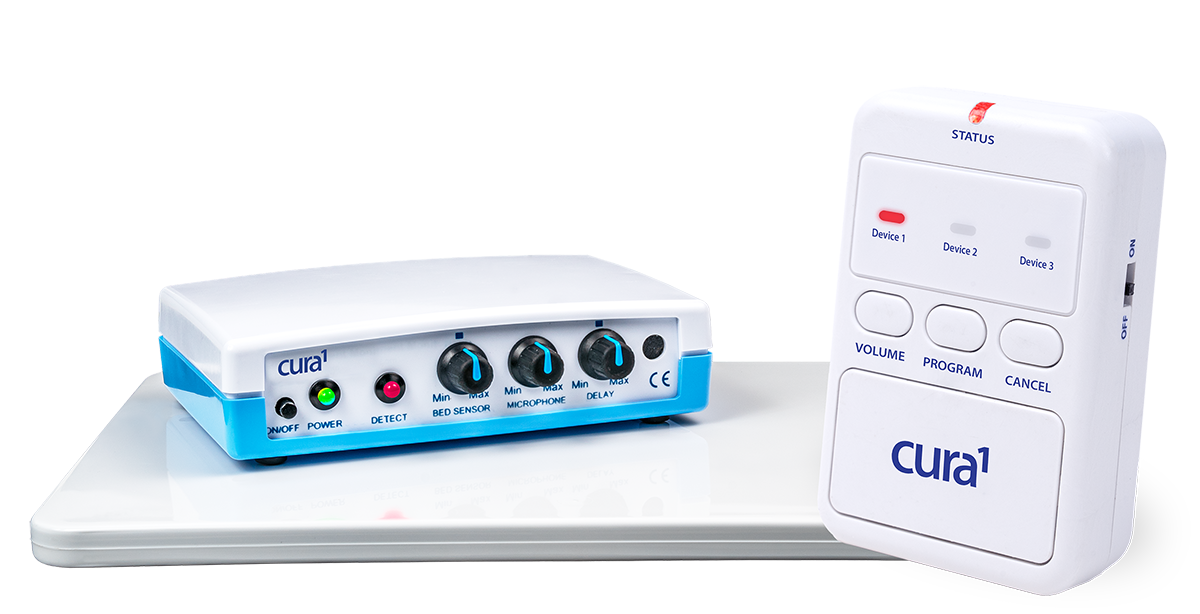
Safe-Life Australia supplied a home-use wireless seizure monitoring solution using the Cura1 range.
Case details
- Entity: Safe-Life Australia
- Product: Cura1 Seizure Alert Kit with Pager
- Location: Melbourne, Australia
- Use case: Home-based nocturnal epilepsy monitoring
- Audience: Families, carers, home care environments
What challenge needed solving?
A young lady in Melbourne experiences most of her epileptic seizures during sleep. Because events can occur without being witnessed, there was a risk of delayed assistance overnight. The family also reported ongoing anxiety because continuous bedroom monitoring was not practical.
The environment was a typical home setting. The solution needed to be suitable for night-time use, non-intrusive, and capable of alerting carers elsewhere in the home when seizure-related movement was detected.
Why was Safe-Life selected?
- Requirement for a home-use setup that could be self-installed without specialist infrastructure.
- Preference for a non-intrusive monitoring approach that supports privacy and dignity.
- Need for alerting via wireless pager(s) so carers could be notified from other rooms.
- Ability to source the system from an Australian provider for local support and supply.
What solution was implemented?
Safe-Life supplied the Cura1 Seizure Alert Kit with Pager, a plug-and-play monitoring kit designed for home use. The kit detects seizure-related movements during sleep and sends an alert to wireless pager receiver(s) when an event is detected.
- Safe-Life discussed the client’s night-time seizure risk and the family’s monitoring needs.
- The family selected a home-use kit from the Cura1 seizure monitoring range.
- Safe-Life supplied the Cura1 Seizure Alert Kit with Pager.
- The family self-installed the system and positioned it for night-time monitoring.
- Pager alerting was used so carers could receive notifications while elsewhere in the home.
For broader context and related options in this range, see Seizure Alert Devices (Australia).
What improvements were observed?
- Night-time seizures could be detected promptly without continuous in-room supervision.
- Alerts were delivered via wireless communication to mobile pager(s) within the home.
- Carers were able to respond sooner when assistance was required.
- The client reported improved peace of mind when going to sleep.
- Family members reported reduced anxiety and better overall sleep quality.
Key data table
| Feature | Detail |
|---|---|
| Problem Type | Nocturnal seizure risk (night-time epilepsy monitoring) |
| Solution Type | Wireless seizure movement alerting with pager receiver(s) |
| Environment | Home (Melbourne, Australia) |
| Outcome | Earlier awareness of night-time events and reduced carer anxiety |
Summary
A Melbourne family needed a practical way to detect night-time seizures without continuous bedroom monitoring.
Safe-Life Australia supplied the Cura1 Seizure Alert Kit with Pager, enabling wireless pager alerts elsewhere in the home. The family reported improved confidence overnight, with clearer notification when an event occurred.